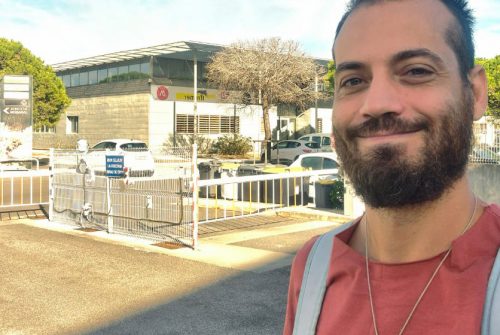
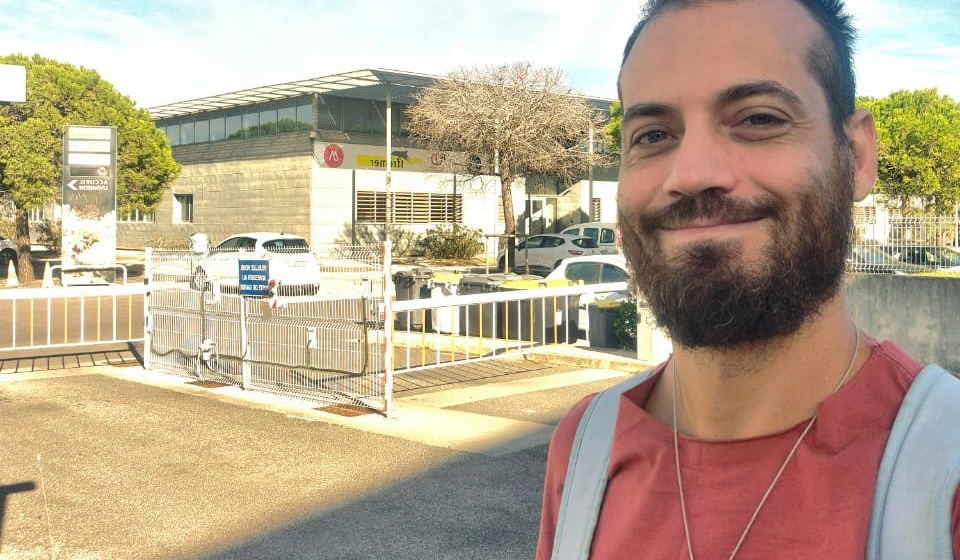
Montpellier, France – Brazilian researcher Everton Giachini Tosetto is leading a pioneering study on the impact of the Amazon River plume on marine biodiversity in the Atlantic, under the French programme Make Our Planet Great Again (MOPGA) 2025. The research is being conducted at the MARBEC Joint Research Unit in southern France, in collaboration with the International Joint Laboratory TAPIOCA, an initiative bringing together IRD and Brazilian universities.
Tosetto was one of the fellows selected by MOPGA – a programme launched by the French government to attract scientists dedicated to climate and environmental issues – thanks to his project investigating how climate variability influences ecological connectivity in the tropical Atlantic.
“My work aims to understand marine species dispersal patterns and how environmental changes affect these processes,” explains the researcher.
From Curiosity to Applied Science
A native of Brazil, Tosetto states that his scientific journey began with a childlike curiosity about how the world works. Today, he uses Lagrangian modelling – a technique that simulates the displacement of marine organisms, such as eggs and larvae, based on ocean currents – to investigate how different ecosystems are connected through marine dispersal.
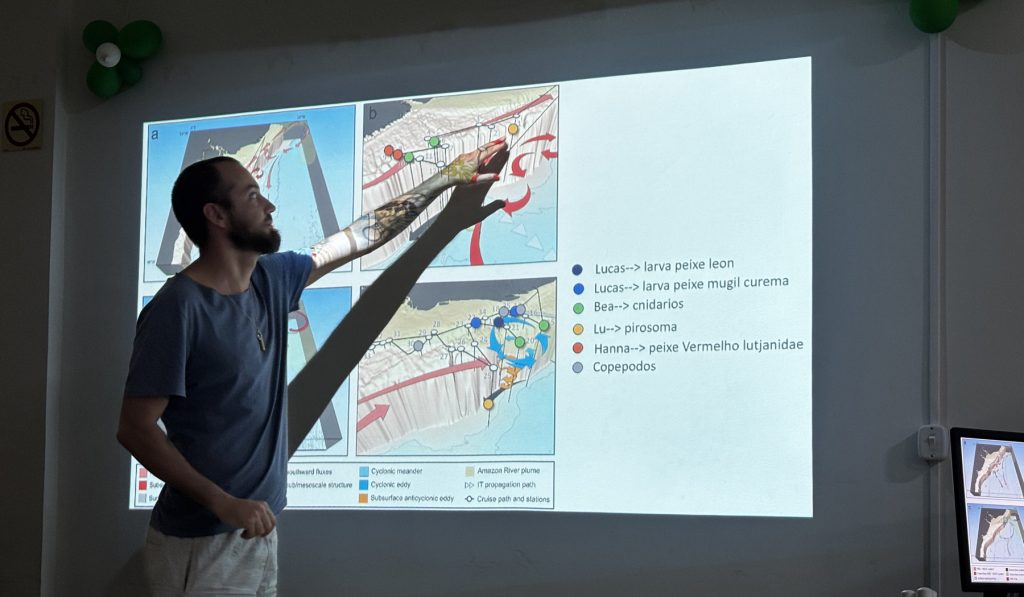
“This approach makes it possible to predict how biodiversity may respond to climate change and to identify priority areas for conservation,” he details. His research integrates hydrodynamic, biological, and climate data, with a special focus on the region influenced by the Amazon plume, which transports sediment, nutrients, and organic matter thousands of kilometres into the ocean.
A Scientific Bridge Between Brazil and France
The researcher highlights the importance of collaborating with IRD and LMI TAPIOCA for the development of high-impact science. “Working in this research ecosystem enables the integration of different areas of knowledge and the generation of innovative solutions to complex environmental problems,” he states.
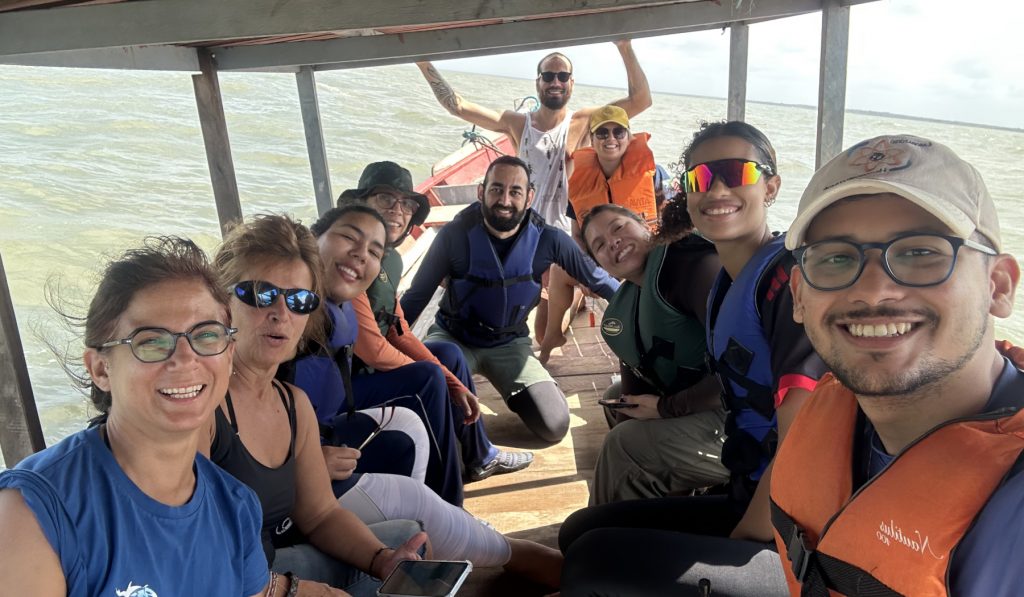
Alongside computational work, Tosetto participates in field campaigns, such as those carried out under the BioARP2 project, which collects data on coastal biodiversity in northern Brazil. “Bringing the knowledge generated here back to communities and public managers is a fundamental part of my work,” he emphasises.
Contributions to Marine Sustainability
The study led by Tosetto is aligned with sustainability science, providing inputs for:
- Public policies on marine conservation
- Sustainable fisheries management strategies
- Biodiversity protection under climate change scenarios
- Strengthening the resilience of coastal communities
“Understanding species dispersal and connectivity between ecosystems helps in making more informed decisions about the use of marine resources,” concludes the researcher.
IRD. Everton Giachini Tosetto: étudie le rôle du panache de l’Amazone sur la biodiversité marine de l’Atlantique. 2025. Avaliable at: https://www.ird.fr/everton-giachini-tosetto-etudie-le-role-du-panache-de-lamazone-sur-la-biodiversite-marine-de. Acessed on: 08/12/2025.