

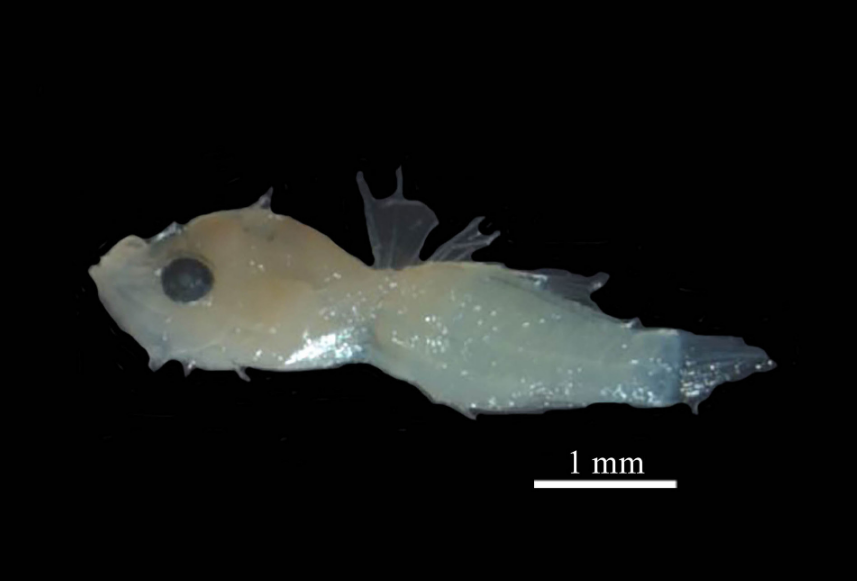
The invasive Indo-Pacific lionfish (Pterois volitans) has been spreading rapidly
across the Atlantic Ocean, causing significant ecological impacts. This study reports
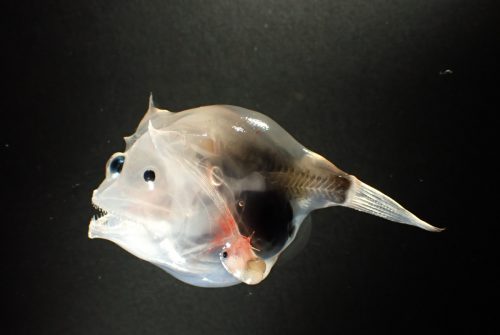
the first known record of a lionfish larva from the Amazon Continental Shelf off
Northern Brazil which expands on existing knowledge of lionfish establishment in
the region. The specimen, collected during the AMAZOMIX survey, was identified
using DNA barcoding: a technique that analyzes a fragment of the COI gene for
precise species identification. The larva was found near the coast of the Brazilian state
of Amapá and presented characteristics typical of the genus Pterois, including the
development of the fins and its distinctive pigmentation patterns. This finding, together
with the previous records of adult individuals in the region, indicates local breeding
in an established population. The phylogenetic analysis revealed that the COI haplotype
of the larva matches one recorded previously in the Amazon region, which reinforces
the hypothesis of an invasion through the Caribbean, followed by migration and the
expansion of the range of this invasive species. These findings highlight the effectiveness
of DNA barcoding for the reliable identification of fish larvae and underscore the need
for further studies on the dynamics of lionfish populations established in Brazilian waters
to support the development of management measures and effective control strategies.
DOI: doi.org/10.3391/bir.2026.15.1.18
Reference
Pantoja J.S.L., Campos P.N., Corrêa L.C., Díaz X.F.G., Melo N.F.A.C., Sá A.L.A., Bertrand A., Hamoy I.G.H. 2026. Closing a cycle: first record of a larva of the invasive lionfish Pterois volitans (Linnaeus, 1758) from the Amazon Continental Shelf. BioInvasions Records, 15: 195-202.