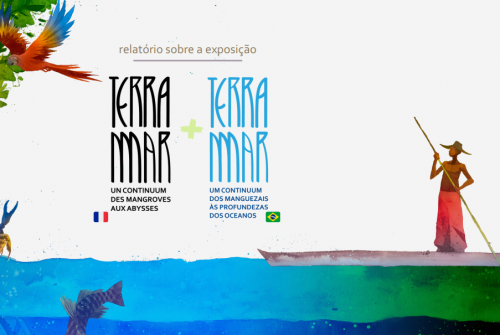
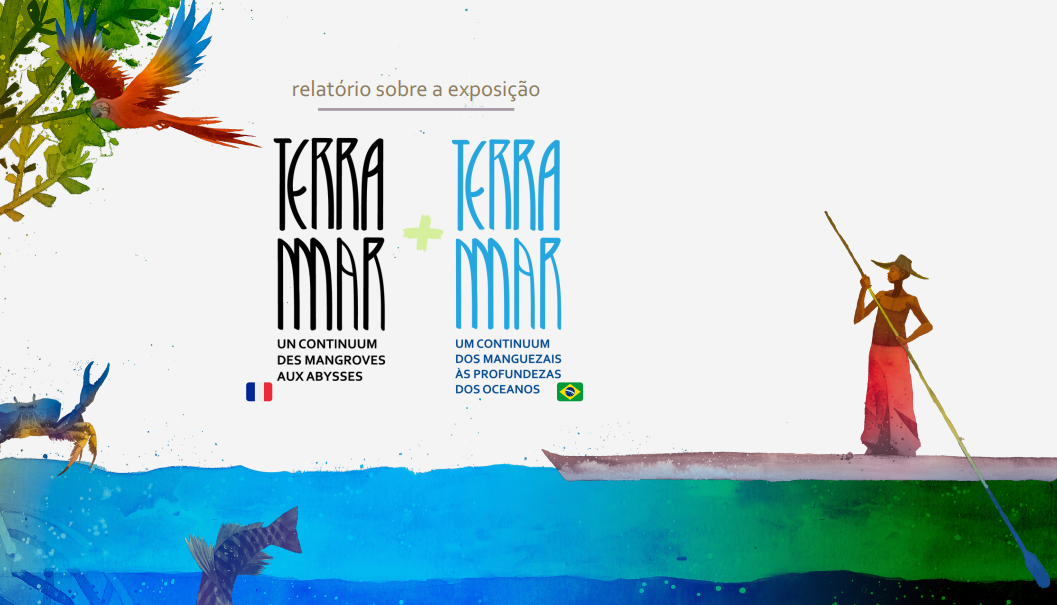
The exhibition, which brought together art, science, and ocean education, reached diverse audiences on both sides of the Atlantic throughout 2025. The Terra-Mar project, a pilot initiative for international cooperation (Tapioca), mobilized researchers, artists, educators, and traditional communities in an integrated strategy to raise awareness and disseminate scientific knowledge about the marine biodiversity of the Tropical Atlantic Ocean and contemporary socio-environmental challenges.
With funding and support from important institutions in Brazil and France, the project promoted the circulation of scientific content through artistic and pedagogical language in cultural and high-traffic spaces, connecting knowledge and institutions in an unprecedented way. The first edition was held in France, consolidating a model of accessible and engaging scientific communication.
France: ocean science at one of Europe’s largest aquariums
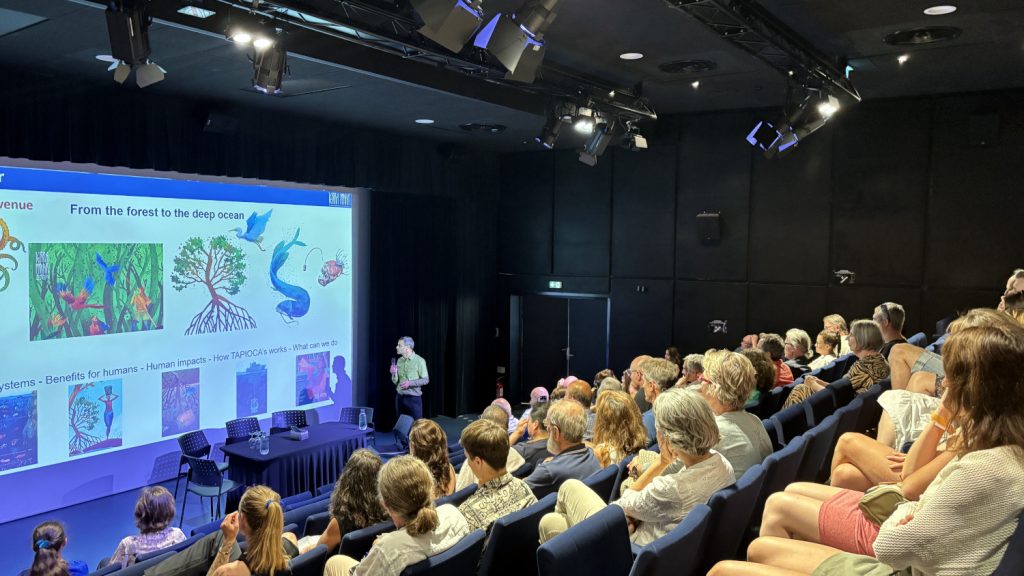
In Montpellier, Terra-Mar occupied Planet Ocean Montpellier between June and September 2025, with the official opening on June 17. Located in an aquarium that receives around 185,000 visitors during the summer, the exhibition expanded the reach of ocean education beyond academic circles.
One of the highlights of the program was a lecture by researcher Dr. Arnaud Bertrand on September 11, which brought together approximately 200 participants to discuss ocean science, climate change, and marine biodiversity.
The initiative benefited from the collaboration of institutions of excellence, such as the Institut de Recherche pour le Développement (IRD), the MARBEC laboratory, the Université Côte d’Azur, the LOG and LOV laboratories, as well as institutional support from the French Embassy in Brazil and the Consulate General of France in Recife.
Brazil: art, science, and community engagement
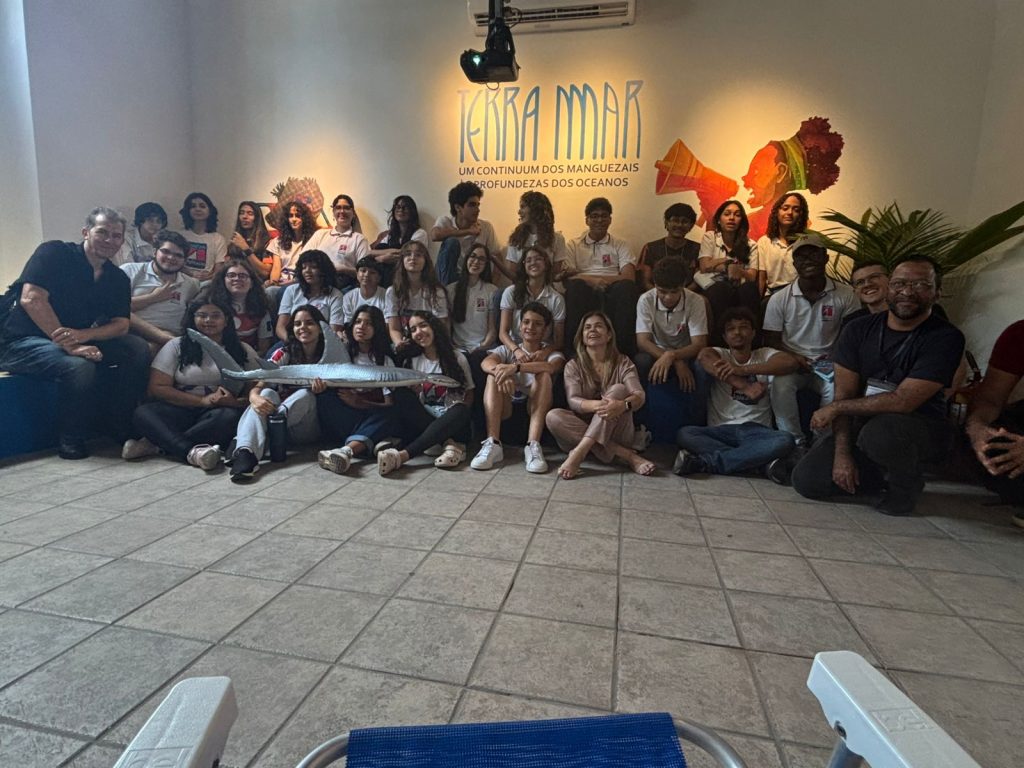
In Brazil, the Terra-Mar project was carried out in Recife, with an exhibition at the Malakoff Tower between October 11 and 27, 2025, as part of the France-Brazil Season program.
The curators combined the visual identity conceived by Pernambuco illustrator Ayodê França with sculptures made from recycled materials created by Eliú Damasceno, from the Conexões Viscerais project. The experience was enriched by audiovisual content from scientific expeditions, specimens preserved in glass provided by laboratories at UFPE and UFRPE, and 3D resin pieces painted by Arthur Luiz with realistic techniques inspired by coastal species.
The program included the conference series “Ideias para adiar o fim do mundo!” and educational activities such as “Eu sou um caranguejo e estou de andada!” both consecutive in literal translation “I am a crab and I am on the move!” and “Ideas to Postpone the End of the World”, which involved local schools and communities.
Results and legacy
Terra-Mar demonstrated that integrating artistic language and scientific rigor can broaden access to ocean knowledge, strengthen Franco-Brazilian cooperation, promote public engagement with environmental issues, and connect traditional and scientific knowledge in a meaningful way.
The project is aligned with the United Nations Decade of Ocean Science (2021-2030) and served as a replicable model for sensitive and contextualized scientific dissemination initiatives. In addition, the exhibition is available online at terramar.online and is accessible globally.
For more information:
To access the full report in Portuguese, click here!