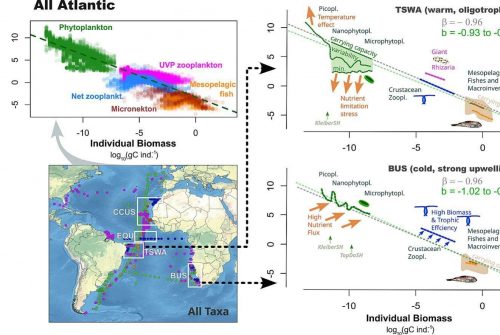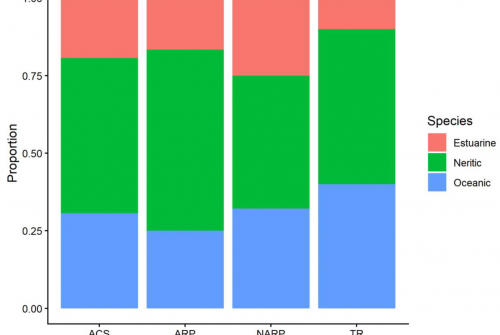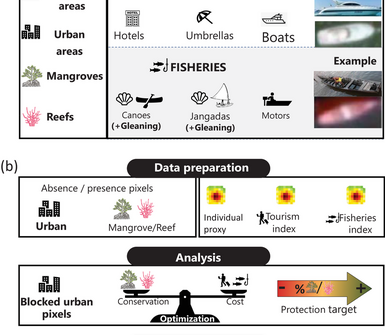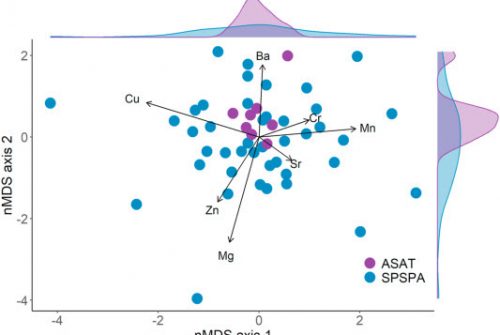

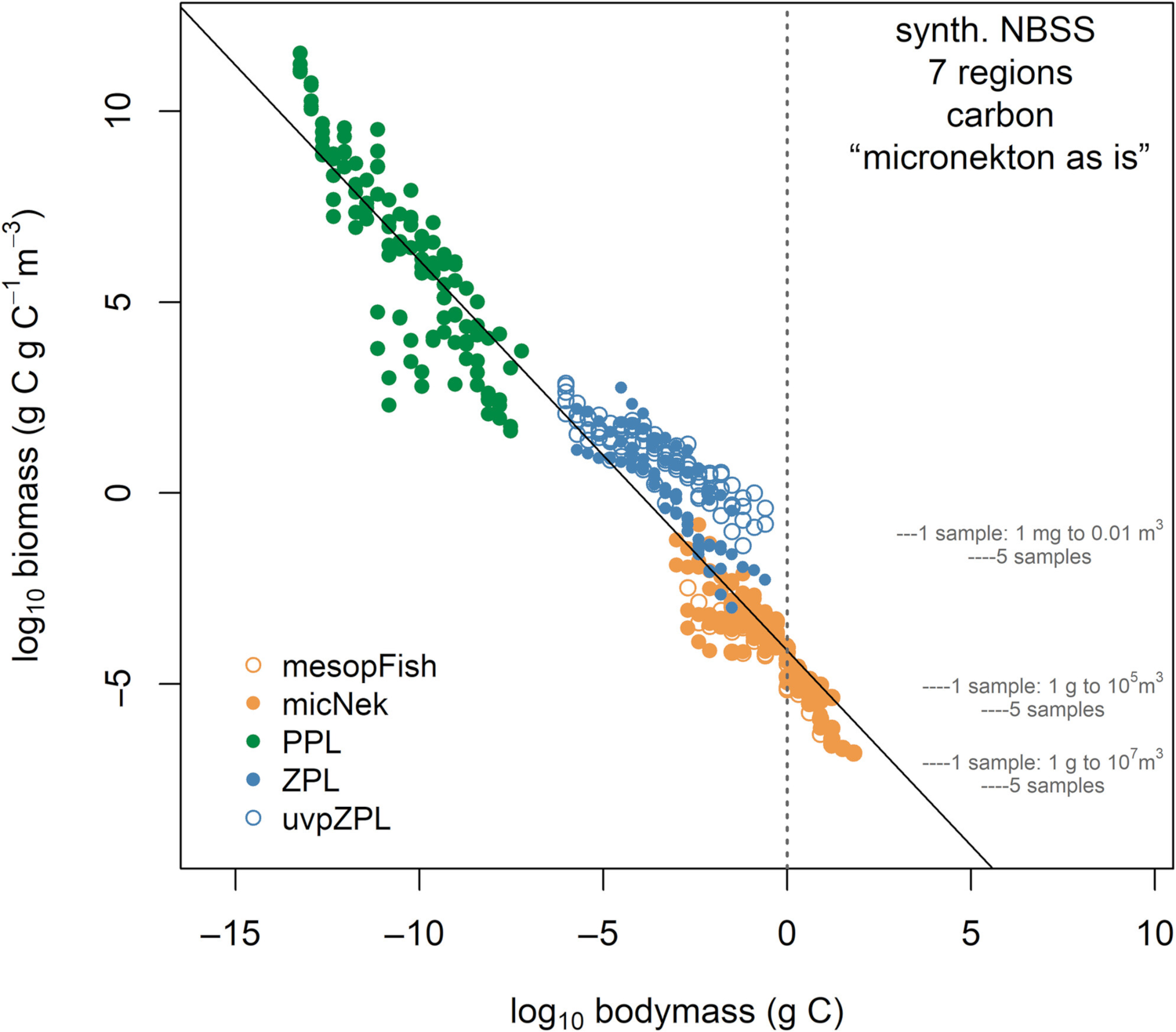
Synthetic normalized biomass size spectra (NBSS) comprising non-synoptically sampled phytoplankton, meso- and macrozooplankton, and micronekton including mesopelagic fishes were explored to analyze pelagic community structure in seven regions of the tropical and the subtropical Atlantic representative of different water bodies (NE Brazil shelf, NE Brazil oceanic islands, northern and southern offshore Benguela Upwelling System, northern offshore Canary Current Upwelling System, equatorial region, southern Canary Current Upwelling System oxygen minimum zone). For mesopelagic fishes and micronekton, conversions were applied accounting for sampling biases in relation to other ecosystem components. Three main results were obtained. Firstly, NBSS slopes based on biovolume were significantly shallower than slopes based on carbon contents, as revealed in part through pairwise comparisons of linear models and by ANOVA. The ensemble mean slope for six regions combined (one region omitted due to missing zooplankton data) measured in terms of biovolume was −0.866, and the respective value in terms of carbon biomass was −0.894. Secondly, log ratios of spectral densities, that is, contrasts, between consumers and phytoplankton increased with decreasing primary production. Contrasts for total micronekton and mesopelagic fishes relative to phyto- and zooplankton varied with primary production, indicating that below a primary production of 650 mg C m−2 day−1, their spectral densities were higher than predicted by phytoplankton. Above this level, however, the spectral densities were lower. Thirdly, regional population marginal means were positively correlated with primary production in terms of carbon biomass (p = 0.01) but not biovolume (p = 0.48). Biovolume NBSS slopes were negatively correlated with primary production (p = 0.02), if the northern Benguela Upwelling System was not included (else p = 0.11). The increase in biovolume relative to the carbon biomass of gelatinous organisms is discussed as allometric advantage to enhance trophic transfer efficiency. Trophic transfer efficiencies ranged from 28.9% to 36.8% for open-ocean systems and from 36.8% to 49.7% for coastal and oceanic island habitats. The results suggest that synthetic pelagic size spectra provide a powerful framework to detect regional and functional shifts in Atlantic pelagic communities, offering predictive value for future ocean changes under climate scenarios.
DOI: doi.org/10.1002/ecs2.70608
Reference
Fock H.O, Andresen H., Bertrand A., Farias G.B., Carré C., Couret M., Pérez J.D., Dudeck T., Dugenne M., Duncan S., Figueiredo G.G.A.A., Frédou T., Lucena-Frédou F., Díaz X.F.G., Yemane D., González-García C., Kiko R., Landeira J.M., Lira S.M.A., Lüskow F., Marañón E., Melo P.A.M.C., Neumann-Leitao S., Eduardo L.N., Stemmann L., Schwamborn R. 2026. Synthetic pelagic biomass size spectra of the tropical and subtropical Atlantic. Ecosphere, 17: e70608.